Type “mechanical engineering” into a general job search engine and you get 40,000 results, half of them recruiter reposts of the same role. Type it into a niche engineering job board, and you get 300, most of them real.
That difference is the argument for the need of specialist boards. Fewer listings, better signal, and an audience that already understands what a P.E. stamp or a robot commissioning window means.

Below are the top five places worth your time for engineering jobs, what each is actually good at, and where each falls short. One is a freelance job board, One is a broad engineering search, one a long-running dedicated board, one is run by a professional society, one is for contract work only, and one is a career resource job board.
Summary
These are the five best engineering job boards in 2026:
- JOINER Services
- iHireEngineering
- EngineeringJobs.net
- ContractEngineeringJobs.com
- SME Jobs Connection
Why The Big Job Websites Struggle With Engineering Roles?
General platforms optimize for volume. They have to, because they serve nearly every occupation in the employment market, from retail to radiology, with hundreds of thousands of live roles at any moment.
For engineers, that creates three specific problems. Job titles blur, so “project engineer” pulls up sales roles and IT tickets. Duplicate job postings from staffing firms bury the direct employer.
Filters are the third problem. They rarely reach the detail that matters, like which PLC platform a plant runs or whether a role needs a licensed professional engineer.
Niche boards fix some of that by narrowing the audience to one corner of the engineering industry. The trade-off is volume: fewer job openings, and in some cases a heavy tilt toward academic postings.
The 5 Best Engineering Job Boards to Bookmark
Each one serves a different kind of search, so the order below runs from project and contract work through to permanent roles in specific disciplines.
1. JOINER Services
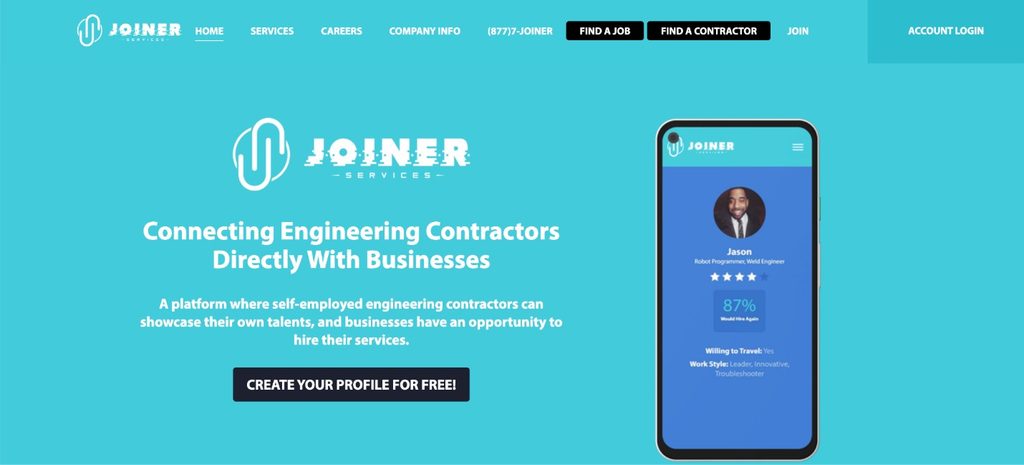
JOINER Services is not a traditional job board, and that is what makes it work for engineers who want project work. Instead of applying into a queue, contractors keep a profile on the platform and companies search those profiles directly to staff projects.
That flips the direction of the search. Businesses filter by technical skills, experience, job title, location, availability, and star rating, then contact the engineers who fit, while open contracts also run on a public job list.
What a Joiner Profile Carries
A profile holds far more than a resume does. Joiner Services screens contractors through reference checks, educational background verification, and interviews.
After each project, the client rates the work on 10 questions, records whether they would hire the contractor again, and confirms the technical skills used on the job.
The work is industrial, covering the engineering disciplines that keep plants running:
- Weld engineers and Certified Welding Inspectors
- Controls engineers and PLC programmers
- Robot programmers and automation technicians
- Electrical engineers and design engineers
- Manufacturing tooling engineers
- Program managers
For employers, that means seeing exactly who is available before committing, and for engineers it means the rate, the availability, and the past project record do the talking instead of a cover letter.
- Best for: Engineers who want contract engineer jobs on industrial projects, and companies staffing a launch, retrofit, or shutdown with people they can vet upfront.
Engineers can create a free profile with skills, experience, and availability, then let businesses come to them. If contracting is new to you, the blog also covers the pros and cons of contract work before you commit to the model.
Need qualified engineering support for an upcoming shutdown, installation, or plant project?
2. iHireEngineering
Source: ihireengineering.com
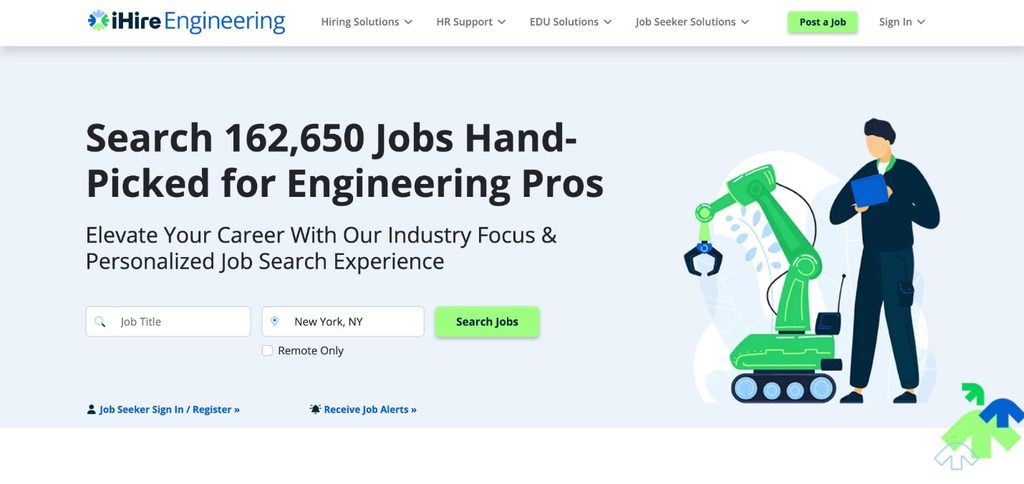
iHireEngineering sits inside the iHire network, a group of niche boards split by occupation. The engineering site combines employer-posted roles with listings it gathers from thousands of other sites, which puts well over 100,000 engineering jobs behind one search.
Filters run by discipline, location, and experience level, so field engineering, civil, mechanical, manufacturing, and design roles all surface without the retail and logistics noise of a general job search engine.
Job seekers search for free, set alerts, and get salary data, career advice, and skills development content alongside the listings, plus resume assistance if their application materials need work.
Students still at university or finishing school can use the same site to prepare for the engineering profession, with internships and entry-level roles filtered in rather than buried.
Employers get a searchable resume database, candidate matching, branded email alerts, and messaging tools, with listings refreshed back to the top of results at intervals rather than sinking after the first day.
- Best for: Broad, discipline-filtered searching when you want engineering volume in one place.
- Limitation: Many listings are aggregated rather than posted directly, so an application can bounce you to another site to finish it.
3. EngineeringJobs.net
Source: engineeringjobs.net
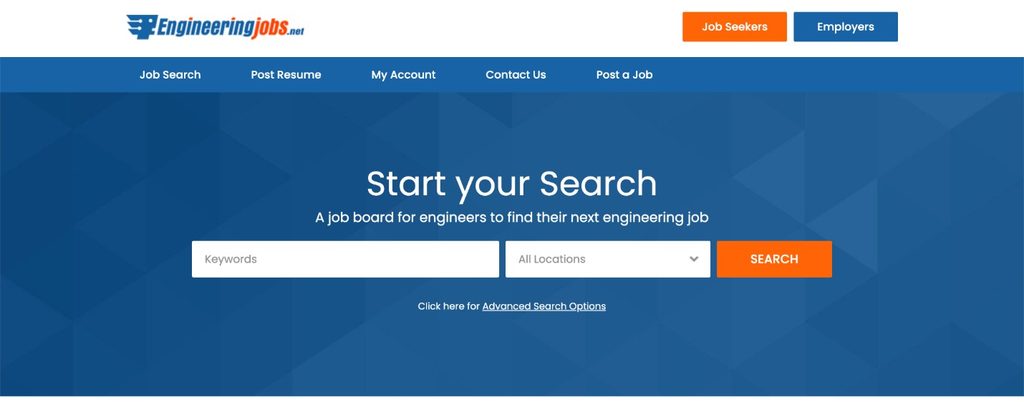
EngineeringJobs.net is the traditional dedicated engineering board. There is no society membership behind the website and no adjacent industries mixed in, just engineering roles posted by employers in the United States and internationally.
The categories cover the main disciplines:
- Aerospace and mechanical
- Chemical and environmental
- Civil and industrial
- Computer, software, and electrical
Job seekers create an account, upload a resume, apply, and set email alerts at no cost.
Employers get listings that run for 60 days, applicant routing into their own tracking system, and company profiles that carry a logo and video, though there is no free posting tier.
- Best for: Direct employer listings that stay live long enough to be worth checking weekly.
- Limitation: The site publishes little about its audience size, so employers are buying reach they cannot easily estimate before posting.
4. ContractEngineeringJobs.com
Source: contractengineeringjobs.com
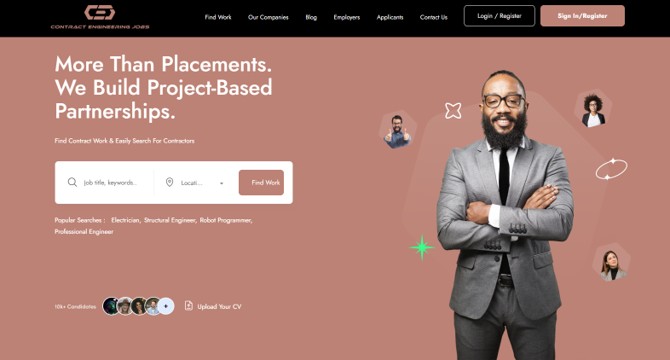
Contract Engineering Jobs is a specialized employment platform designed to connect skilled engineering professionals, independent contractors, and technical specialists with companies seeking project-based support. Unlike traditional job boards that focus primarily on permanent employment, the job board emphasizes contract opportunities across engineering, industrial automation, robotics, electrical trades, and manufacturing. Job seekers can create profiles, upload resumes, search contract opportunities, and showcase their technical expertise to potential employers. The website also promotes resume assessments, job-fit scoring, and career guidance to help candidates identify opportunities aligned with their experience.
For employers, Contract Engineering Jobs provides a targeted platform to identify and recruit technical professionals for temporary assignments, specialized projects, and contract-based positions. Its industry-specific approach simplifies hiring by connecting businesses with candidates who have relevant engineering skills and project experience. Features include candidate searches, job postings, and employer registration, making this job board useful for organizations that need flexible technical staffing without relying solely on traditional recruiting agencies. The focus on project-based partnerships distinguishes it from broader employment websites.
- Best For: Independent engineers, robot programmers, controls engineers, and manufacturing professionals seeking contract opportunities, as well as employers looking for specialized technical talent.
- Limitations: A narrower industry focus than major job boards, potentially fewer available listings and candidates, and limited publicly visible information about current job volume, employer participation, and job board activity.
5. SME Jobs Connection

Source: jobsconnection.sme.org
SME Jobs Connection is the career center of SME, the manufacturing professional society, and the categories read like a shop floor rather than a campus:
- Manufacturing engineering and process engineering
- Control systems and automation
- Tooling, product design and development
- Quality and inspection
- Maintenance and installation
Industry filters go further into CNC, plant engineering, robotics, and tool and die work.
Alongside its job listings, SME is known for providing career resources such as continuing education and professional development material that help engineers keep pace with the technology shaping the future of manufacturing.
- Best for: Permanent manufacturing, tooling, and quality roles at companies recruiting through the manufacturing community.
- Limitation: Listing volume is modest, with searches often returning a few dozen roles rather than thousands.

Getting More Out of Any Engineering Job Board
The board matters less than how you use it. Four habits separate a productive search from a month of refreshing search tabs.
- Set alerts before you browse: Niche boards carry fewer roles, but the listings are updated daily, and the good ones move fast. Your ability to apply in the first 48 hours matters more than how long you spend scrolling.
- Read the posting for equipment, not adjectives: “Fast-paced environment” tells you nothing. “Rockwell PLCs, FANUC robots, two shifts” tells you whether you can do the job and what to put at the top of your resume.
- Mirror the language of the role: If the posting says controls engineer and your resume says automation specialist, both a keyword filter and a hiring manager may miss the match.
- Follow the employer, not just the board: Many engineering companies post to their own careers page first and syndicate later. A weekly check of five target employers often surfaces roles before they appear anywhere else.
If You Are the One Posting the Job
Employers face the mirror image of this problem. A general site brings volume and a lot of unqualified applications. Post engineering jobs to a society board instead, and you reach a narrower, better-informed pool of qualified engineers at a higher cost per listing.
Budget accordingly. Niche engineering boards typically charge a few hundred dollars for a 30-day listing, often with upgrades that email the role to members or push it out to partner sites.
Match the board to the discipline. Mechanical design work belongs on a mechanical board, transportation and licensed civil work on a licensure-focused one, and industrial engineering or automation usually needs a source built for contract technical talent rather than permanent applicants.
Be realistic about timing. Posting works when you are adding permanent employees and have weeks to spare. When a line is down on Thursday, the success of the project depends on a different route.
When You Cannot Wait for Applications!
Job boards run on a delay. You post, applications trickle in, you screen, you interview, and three weeks later you make an offer. That works for planned headcount and fails for a startup date that already slipped.
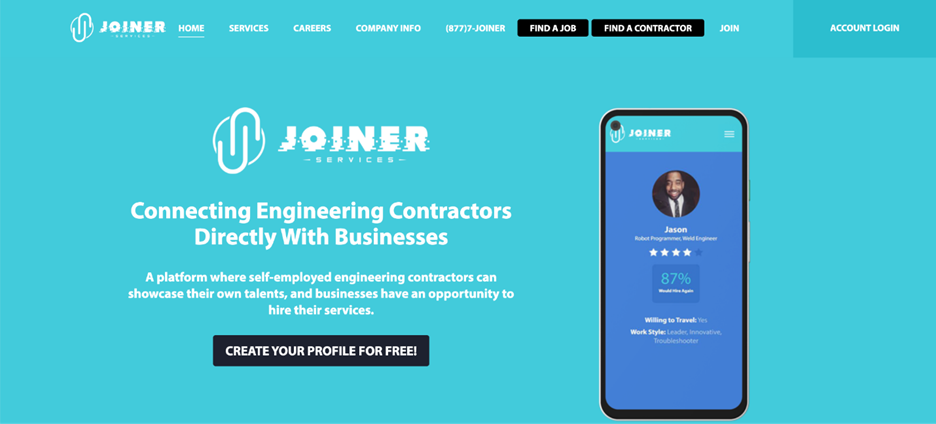
JOINER Services runs the other way. Businesses search profiles of screened engineering contractors, see who is available now, and read what previous clients said about the work.
From there, you interview the shortlist with your own engineering team, so the technical judgment stays in-house.
For engineers, the same platform works as a standing shopfront. Your profile lists your skills, your experience, and when you are free, so your next opportunity can arrive without another application.
Hiring for a integration need added production support? Create a free business account and compare engineers by skills, experience, availability, and client feedback. Looking for work instead? Build a profile and let the projects come to you.
FREQUENTLY ASKED QUESTIONS:
Below, I list some FAQs about the best engineering job boards.