Finding a good engineer takes time. Finding one who can commission a robot cell, rewrite PLC logic, or qualify a weld procedure on short notice takes even longer.
Very few engineers plan their way into freelancing. It often begins with a short contract after a layoff, a request from a former manager, or a project that pays better than permanent employment.
Then the project ends, and the real question arrives: where does the next one come from?
Platforms are the obvious answer, but they are not interchangeable. Some focus on CAD modeling and engineering design, while others carry research assignments or industrial contracts that require engineers to work on-site.
Where you sit in the engineering industry decides which is worth your time. Pick wrong and you spend months building a profile nobody in your field reads, which is a waste of a good LinkedIn profile and a decent portfolio.

These top six carry real engineering work. Below is a breakdown of what sits on each, what fees apply, and how difficult it is to find the first project.
Summary
These are the best freelance websites for engineers in 2026:
- JOINER Services: Best for industrial automation contract projects
- Cad Crowd: Best for CAD and product design
- Upwork: Best for remote technical tasks
- Toptal: Best for software-side engineering
- Kolabtree: Best for research-grade consulting
- Field Engineer: Best for on-site field and telecom work
How Freelance Engineering Platforms Differ?
Contract engineering stopped being a fallback career a while ago. Plants run leaner permanent teams and buy specialist capacity by the project, which means steady work exists for engineers who are findable when a launch date slips or a line goes down.
The platform question matters because of how that work now reaches people. Companies search, filter, and shortlist before they ever post anything public, so the site you build a profile on decides which clients see you at all.
6 Best Freelance Websites for Engineers in 2026
The list runs from industrial contract work through design, general marketplaces, and research-level consulting.
1. JOINER Services
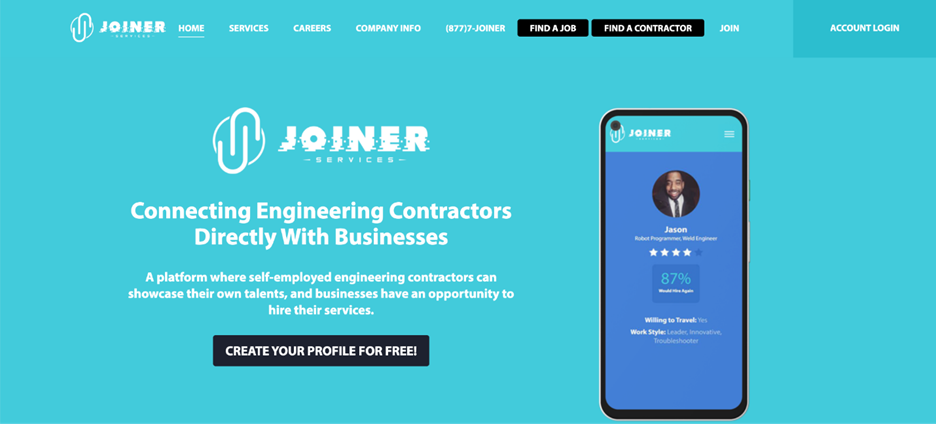
JOINER Services is where engineers go for contract work on the plant floor rather than gigs delivered by email. You build a profile, businesses search it directly, and the projects that follow are engineering design, integration work, and production support.
Your profile is the product. It includes technical skills, work experience, your location, availability to work, and a star rating. Clients can also confirm skills after a project and state whether they would hire the contractor again.
JOINER Services screens applicants through reference checks, education verification, and an interview before their profiles become active.
There industrial disciplines include: weld engineers, controls engineers, robot programmers, electrical engineers, design engineers, program managers, PLC programmers, automation technicians, and Certified Welding Inspectors.
Because clients search and approach you directly, you are not buying credits to bid or undercutting strangers to be seen. Companies see availability, ratings, and confirmed skills, then contact the engineers who fit, and the ones who deliver on their project tend to be requested more.
For industrial engineers, that makes it the most direct route to paid work of the six, and the one where future projects come from your past work results rather than your bidding volume.
Start here if: Your work is industrial and hands-on, and you want contract engineer jobs with real scope rather than small remote tasks. New to self-employment? The pros and cons of contract work are worth reading before your first assignment.
Create a free profile, list what you can do and when you are available, and let work find you.
2. Cad Crowd
Source: cadcrowd.com
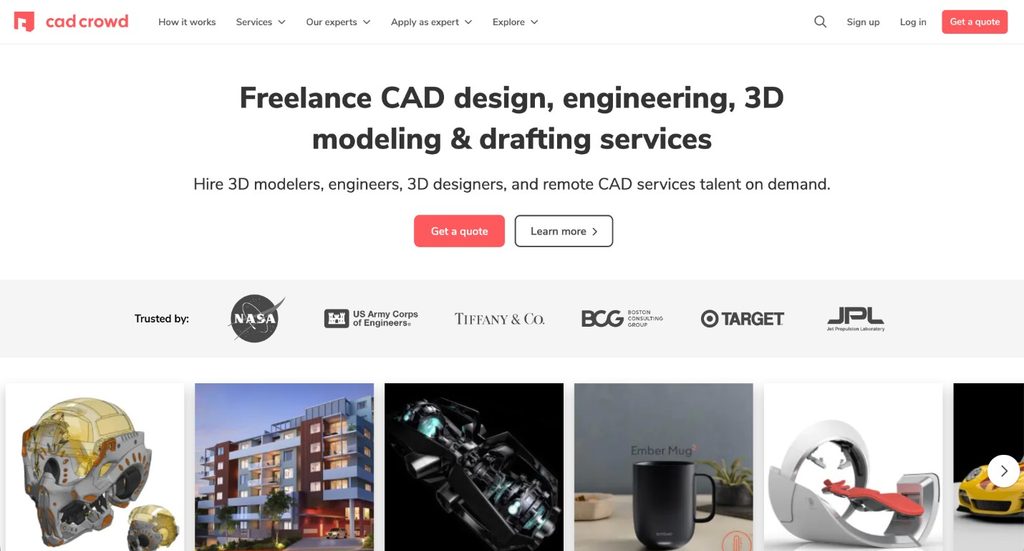
Cad Crowd sits at the design end of engineering freelancing: 3D modeling, CAD drafting, product design, rendering, simulation, and reverse engineering. Clients arrive with a concept and leave with manufacturable files, so precision in your CAD software of choice matters more than breadth.
Work reaches you three ways. Clients hire directly for private projects, post hourly work, or run a design contest where several designers submit concepts, and one gets paid.
For private and hourly projects, Cad Crowd matches clients with pre-qualified freelancers, while the wider marketplace carries open job contracts and contests, and the platform handles escrow, NDAs, and project management.
Most briefs ask you to create something from a concept, so the job is closer to product design art than to plant operations. Rates depend on the complexity of the model and how much manufacturing detail the client needs.
Start here if: You do mechanical design, CAD modeling, or product development and want clients who already speak that language.
Limitation: Contests may require substantial technical design work without guaranteed payment. Competing against many entries can also become inefficient for established designers. The work is remote, with little opportunity for on-site assignments.
3. Upwork
Source: upwork.com
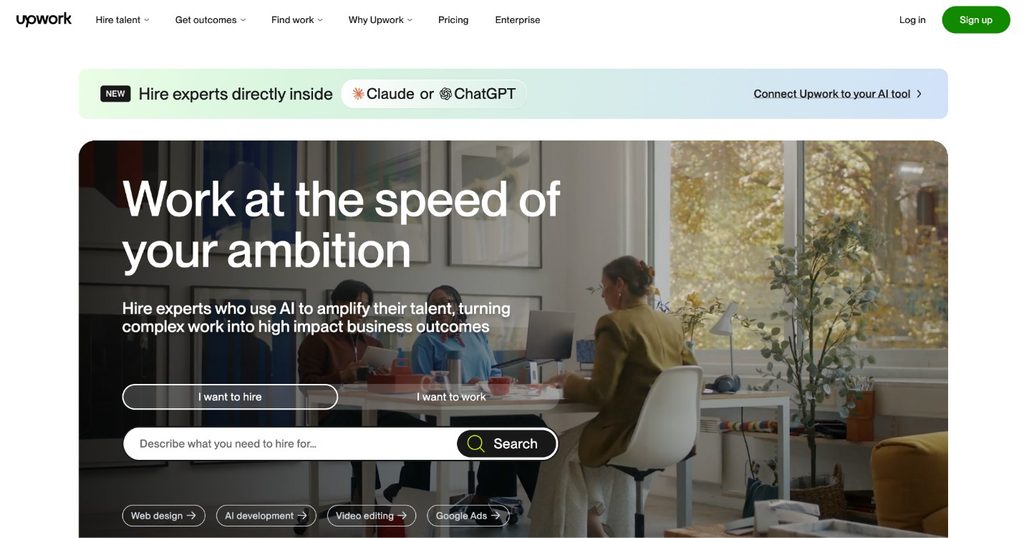
Upwork is the largest open marketplace, with millions of registered freelancers and work in every category. Engineering sits alongside writing, software, and design, so the platform is broad rather than technical.
You bid on posted jobs using Connects. Depending on the account plan, freelancers may receive Connects each month, and extra ones cost $0.15 each, so a heavy bidding week has a real price.
The freelancer service fee varies from 0% to 15% per contract, shown before you accept and fixed for the life of that contract.
Signing up is free, and the contract fee is disclosed before you accept, so there are no hidden fees inside the contract itself. Withdrawal charges are separate and depend on how you take the money out, so check those before setting your rate.
Start here if: You do technical documentation, technical writing, CAD drafting, or simulation work that can be delivered remotely, and you are willing to grind through early bidding.
Limitation: You pay to apply. Connects cost money whether or not you win, and the service fee takes up to 15% of what you earn.
Popular jobs draw dozens of proposals from every corner of the world, and most freelancers bidding compete on price rather than expertise, so expect real effort before the first contract lands.
4. Toptal
Source: toptal.com
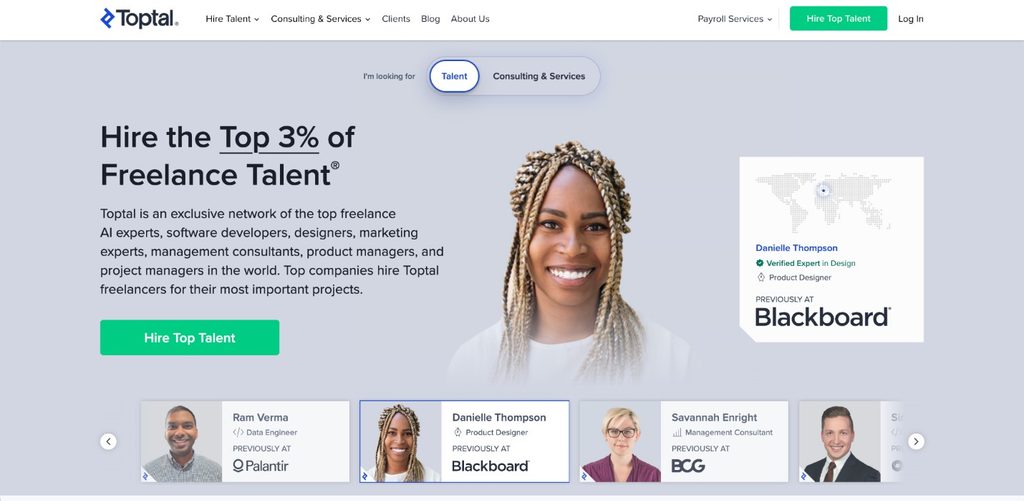
Toptal is a curated tech network for companies interested in adding vetted specialists to an existing team rather than reviewing open proposals.
You apply through a multi-stage screening process covering communication, technical depth, live problem-solving, and a test project. Clients see your profile only after you pass.
Toptal says fewer than 3% of applicants are accepted, and the screening runs roughly three to eight weeks. Engagements that follow tend to run long rather than one-off. Manufacturers do hire here, but usually for software, data, and digital work rather than plant-floor controls or weld engineering.
Start here if: Your work is software or systems oriented, you can develop a portfolio that survives a live technical screen, and you would rather pass one hard assessment than bid every week.
Limitation: The screening takes weeks of unpaid effort with no guaranteed outcome, and your ability to pass it says little about demand once inside. Software, finance, and product work dominate, so mechanical, controls, and manufacturing engineers find far thinner pickings.
5. Kolabtree
Source: kolabtree.com
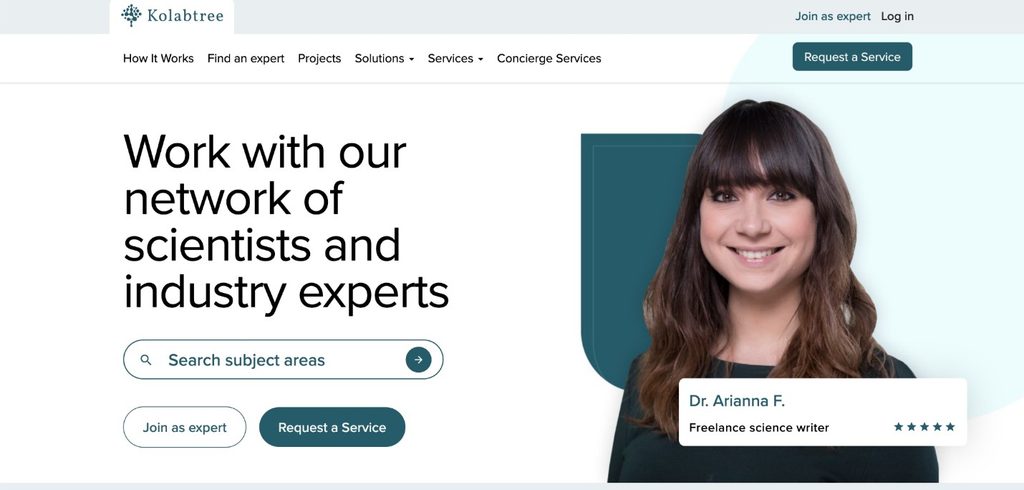
Kolabtree connects businesses with freelance scientists and engineers, many holding PhDs. Clients come looking for skilled professionals to answer a specific question: simulation, FEA, regulatory documentation, medical device design, materials work, or data analysis.
Clients post a project, invite specific experts or open it to the platform, and you respond with a quote. Payment runs per project or hourly, with milestones and timesheets for longer scopes.
Projects tend to be precise, self-contained questions: a simulation to run, a regulatory document to write, a materials or energy modeling problem to solve. The platform sells expertise rather than throughput, and quoting is per project, so you price the answer rather than the hours.
Start here if: You hold advanced qualifications or deep domain knowledge and want consulting-style research work.
Limitation: Volume is low and episodic, so this rarely fills a calendar on its own. Clients often expect academic credentials, and each project means writing a bespoke quote with no certainty of winning it.
6. Field Engineer
Source: fieldengineer.com
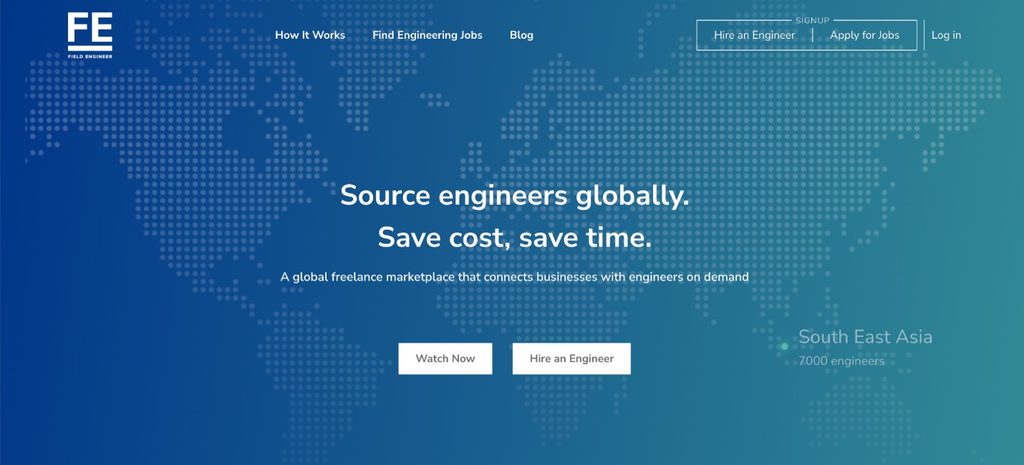
Field Engineer is an on-demand marketplace built around project-based technical and field work. You create a profile, search assignments by location, skills, date, and pay, then apply or counterbid on the payout and hours before accepting.
The strength is work that needs someone physically on site: telecom, network infrastructure, data centers, audio-visual systems, and hardware installations.
Field Engineer says its marketplace holds more than 75,000 vetted engineers in over 200 countries, and the platform handles work orders, time submission, and payment.
Fees are stated plainly. Engineers pay a 10% service fee on what they earn, and businesses post for free.
Start here if: Your work is field-based, particularly telecom, networking, or infrastructure support, and you want short assignments rather than purely remote projects.
Limitation: The marketplace leans heavily toward telecom, IT infrastructure, and field service, so it offers little for mechanical design, welding engineering, or plant automation. Global reach also means competing with engineers in far cheaper markets for remote-capable work.

How A Platform Connects Businesses And Freelance Engineers?
Four things decide whether a site is worth your profile.
- Who else is bidding: On open marketplaces, you compete globally on budget. On screened platforms, you compete on capability, which is where the best engineers and those with extensive experience win.
- What the fees actually are: Service fees, proposal credits, withdrawal charges, and payment processing all bite. Work out your take-home on a real project before committing.
- Whether clients understand the work: A client who has hired a CAD expert before will send a proper spec. A client who has not will ask for a full assembly model, plus topology optimization, and expect it Friday.
- How you get found: Bidding sites reward volume of proposals. Profile-based platforms reward a clear, specific profile, which stays a great resource for you every month once built.
Advanced technology work widens that gap. The more specialized your field, the more valuable it is to be the right expert a client finds rather than one of forty proposals.
Rates, Fees and What You Keep!
Freelance rates are gross revenue, not salary. Before comparing them to a staff job, subtract self-employment tax, insurance, unbilled hours, software licenses, and the weeks between projects.
Fee models differ enough to change your effective rate. A variable service fee of up to 15% plus proposal credits is a different business than a platform where clients hire you directly, and rates are set upfront.
Rate anchoring matters too. Publish a rate you can prove with an extensive record of similar work, and stay flexible on scope rather than on price, because the client who hires you cheaply rarely pays more later.

Where Businesses Find Engineers Directly?
Bidding is a tax on your time. Every proposal is an hour you spent not engineering, and on open marketplaces, most of them go nowhere.
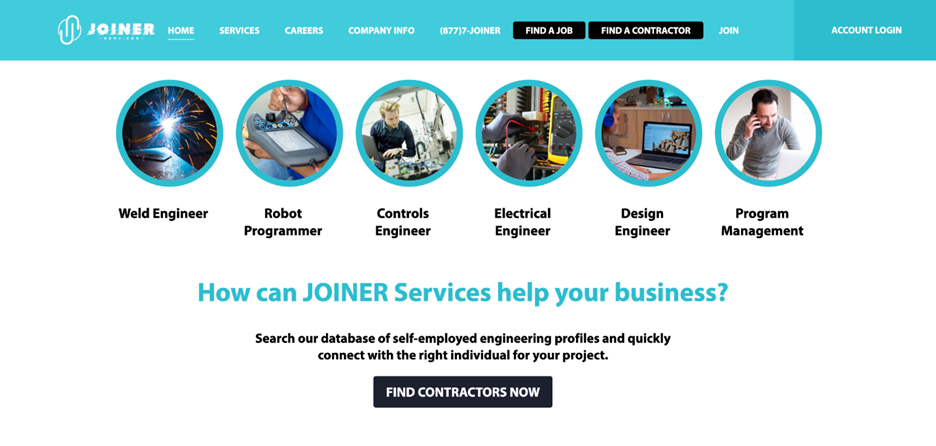
The alternative is a profile that works while you do. On JOINER Services, businesses search by skills, experience, location, and availability, then approach the engineers who match. Your ratings and verified skills do the selling, so the conversation starts at scope and schedule instead of price.
For industrial engineers, that is the difference between chasing small 1 week projects and getting called for a launch, a KIT change, or an integration project.
Create your free Joiner Services profile, list your technical skills, prior work experience, and availability, and start showing up in searches from companies that need exactly what you do.
FREQUENTLY ASKED QUESTIONS:
Below, I list some FAQs about the best freelance website for engineers.