You have a project starting soon and no engineering staff to support the technical work. The requisition has been open for five weeks, the applications are extremely thin and under qualified, and the two talented engineers you actually wanted are employed somewhere else. If that sounds like your company, then this article will help explain how you attract engineering talent away from your competitors.

This guide covers how to scope the role, what engineering candidates weigh beyond salary, how to fix the parts of your hiring process that lose people, and how to keep a project moving while the search runs.
Summary
- Engineering candidates assess the equipment, project scope, technical challenges, and people they would learn from. These details provide more information than general claims about company culture.
- Competitive compensation gets you into the conversation, but benefits, scheduling, and a visible route to career growth influence the final decision.
- A slow recruitment process loses more engineering talent than a modest salary does, because strong candidates are off the market within weeks.
- Your employer brand is built by current employees and the projects they describe, not by the careers page on your website.
- JOINER Services lets you bring in screened engineering contractors while a permanent search runs, so the work keeps moving, and you can see how someone performs before making an offer.
Start With The Role, Not The Job Posting
Most hiring problems begin before anyone advertises anything. The role gets defined by title rather than by work, so job postings attract people who match a label instead of a task.
Write the scope the way an engineer would read it. Name the tools, the platform, the site, the schedule, and the phase of the project.
“Controls engineer, Rockwell and FANUC, two-shift site, line expansion running through Q3” tells a candidate whether they can do the job and whether they want it. “Controls engineer, fast-paced environment” tells them nothing.
Be cautious of filtering the job too much. Fewer applicants will be in your inbox, and you don’t want to miss out on a qualified candidate because they are missing a small or simple skill required to do the job.
Candidates will use filters too, and they might rule themselves out based on the job requirements you listed. The best is to be specific and apply a “workload” or percentage of the job to the skill needed.
What Do Engineering Candidates Actually Consider?
Compensation opens the door. What decides the offer is usually the detail underneath it.
Competitive Salary and What Sits Around It:
Engineers compare offers against the market, not against your last hire. Before posting, check industry trends and what a competitive salary looks like in your region and discipline, including at the tier suppliers and integrators chasing the same people.
Offer competitive salaries and be ready to explain the range. Companies that offer competitive compensation say so in numbers, and vague claims invite candidates to assume the worst.
Competitive Benefits Engineers Actually Use:
Health insurance, retirement plans, and time off are table stakes, and candidates read them as a signal of how the company treats its people.
Competitive benefits that carry more weight in technical roles include tuition support, licensing and certification fees, employer-funded training on new platforms, and a real budget for tools and software.
Wellness programs and similar perks rarely decide anything alone. Other factors, such as workload and whether the equipment works, shape how a job feels day-to-day far more than a gym subsidy does.
Flexibility That Fits The Job:
Remote work suits some engineering roles and not others. Design, simulation, and software work travel well, while commissioning, testing, and field support happen where the equipment is.
Be precise about what this is, then offer the flexibility you can. Compressed schedules, predictable rotations, flexible working hours outside of launch periods, and honest travel expectations all protect a healthy work-life balance.
Respecting personal life is mostly about predictability. An engineer who knows a commissioning phase means six weeks of long days can plan for it, while someone who discovers that they are leaving next week for 6 weeks during a Friday meeting will start looking for a new job.

Company Culture That Engineers Can Verify
Every employer claims a strong culture, so the word has stopped carrying any meaning. Engineers evaluate workplace culture through evidence instead.
They judge the work environment by what they can see, how technical decisions get made, whether someone who raises a risk gets heard, how the team handles a bad day or week, and whether the tools and equipment are current.
A positive work environment shows up in those details long before anyone mentions it in an interview.
Open communication is the part candidates ask about most often, usually indirectly. Questions about why the last person left, or how a failed project was handled, are culture questions.
A company must answer these honestly, like they expect a candidate to answer. An engineer who hears a straight account of a project that went badly will trust everything else you say related to culture.
Build A Brand Engineers Believe In!
A strong employer brand in engineering is not a marketing campaign. It is what your current employees say when someone asks them about the job. Employee testimonials work when they describe specific work: the line they launched, the scrap rate they reduced, the production they keep running daily. Stock photos of people in hard hats, or cheesy slogans do not.
Show the technical work environment. Engineers want to know which equipment and systems you run, whether they would work with cutting-edge technology or maintain something from decades ago.
That detail is what makes a business an attractive place for your technical talent.
Get Into the Engineering Community
Top engineers are rarely browsing job postings. The best engineers in a discipline are passive candidates who hear about roles from people they trust.
Sponsor a local technical society chapter, send your team to industry conferences with a mandate to talk to people, host a site visit for customers, or run an apprenticeship with a nearby technical college.
None of this fills an open requisition this month, but payback could be in 5 or 10 years.
Community work builds your reputation slowly, but the project starting next month cannot wait. Staffing firms like JOINER Services let you browse screened engineering contractors and cover the immediate work to keep things running while your staff focuses on finding that right candidate. Sign up for free today.
Fix the Hiring Process Before Blaming “The Market”
Companies lose more top talent to their own process than to compensation. A good engineer who’s available might only take weeks to decide on where to work. If your onboarding process takes months, then like in Donnie Brasco, just “fuhgeddaboudit!”
Four changes make the difference:
- Shorten the loop: Two interviews and a decision beat five rounds and a panel that cannot find a shared calendar slot.
- Use virtual interviews early: Leverage technology to screen, then bring people on site once, when it counts, and pay for travel.
- Put an engineer in the room early: Candidates judge you on the technical conversation, and a real problem-solving discussion beats an online competency questionnaire.
- Decide fast: If approving an offer takes a week, the candidate might have another one by then, and you will lose out.
In today’s society, many companies will actually “ghost” candidates, so if you tell a candidate the timeline, stick to it! Silence after an interview reads as disinterest, and they will assume you are looking elsewhere.
Show Career Growth And Continuous Learning Opportunities
Limited career growth is a common reason engineers leave organizations. It is also one of the easier factors to address during recruitment. Be up front about career advancement opportunities. Show them how a person in a similar role moved up the organization, what the track to management looks like, and which decisions major decision-making might be handed over after twelve months on the job.
Continuous learning matters now more than ever. Professional development programs and mentorship programs can support long-term company growth. Paid time to learn a new technical skill also gives engineers practical development opportunities.
Ask about their career goals during interviews, then match the growth opportunities you have for them. Providing opportunities that fit that person is what turns a good candidate into a full-time hire.
Clear paths beat vague promises. “We promote from within” means little, while “our last two engineering managers came from this role” means a whole helluva lot.

Attract And Retain: Keep The Engineering Team You Have!
Attract and retain are two big factors that are actually tied together. Every engineer who stays is one you do not need to replace, and the ones who feel valued and supported can become your best recruiters.
Boost morale with the things that engineers actually care about, like proper tools, less firefighting, fewer meetings that could be emails or calls, and credit when they do a good job on a project. Create a welcoming and enjoyable work environment, and retention will take care of itself.
Retention rates also tell candidates something. Engineers ask how long the team has been in place, and a department with a lot of new employees makes retention rates quite obvious within the first interview.
Referrals from current employees remain the strongest source of new talent in most technical hiring. People won’t be able to bring in talent if they talk about how their work-life balance is awful, or they never get credit for their work, or when management is always micromanaging them. Workers will give referrals when they are genuinely happy at their job.
Borrow Top Talent While You Search!
The hardest part of attracting engineering talent is that the work does not pause while you are doing a job search. The project still has deadlines, and your team is already working overtime to support.
That pressure is what often produces bad hires. Two months into an open role, the bar quietly drops, and someone gets hired who was available rather than who was the right fit.
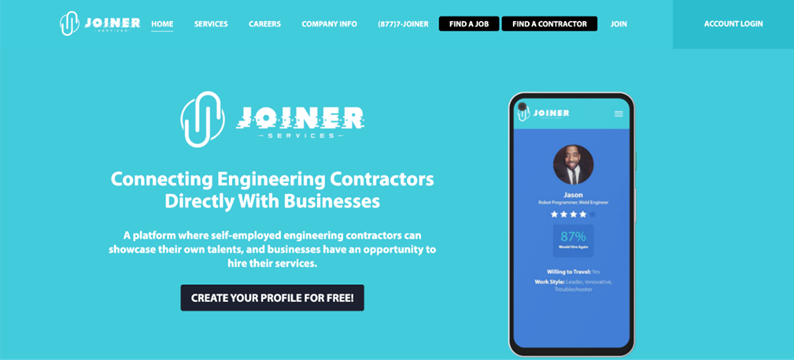
JOINER Services offers a way out of that trap. Bringing in a contract engineer covers the immediate work, which lets the permanent hire search run at the pace it deserves rather than the pace the schedule dictates.
It also works as a hiring channel. Working alongside someone for a few months tells you more than any interview loop, and plenty of engineers take a permanent role at a company they first met as a contractor.
With JOINER Services, you search for screened contractors by technical skills, experience, location, and availability, then read verified skills and past client ratings before contacting anyone. They support staffing needs in controls, robotics, welding, electrical, design, and program management.
Need coverage while you perform a candidate search, or maybe you need support on a temporary basis that does not justify permanent headcount? Create a free business account and find support today!
Not sure which roles to cover first? Contact the JOINER Services team for a free consultation and work through the scope before you commit to a person.
Keep Your Engineering Project Moving→
FREQUENTLY ASKED QUESTIONS:
Below, I list some FAQs about how to attract engineering talent.